The Holy Temple of Pamegiston Taxiarchon
History and Construction of the Temple
The history of the Holy Temple of the Archangels Taxiarchis is inextricably linked to the history of Asomatos. The earliest evidence of the village's existence, in 1246, indicates the presence of religious life from early on. The village itself is named "Asomatos" after this church, as Archangel Michael is often referred to as "Asomatos," meaning a spirit without a body.
The current church was built in 1796. Its construction took place at a time when, after the Treaty of Kuchuk Kainarji (1774), the unhindered observance of Christian worship allowed for the construction of more than 20 churches on Lesbos. These churches, including Archangel Asomatos, were built at the same pace, with enthusiasm, donations from the faithful, and intensive volunteer work, so that they could be completed quickly before the favorable conditions provided by the Ottomans to the Orthodox Greeks changed.
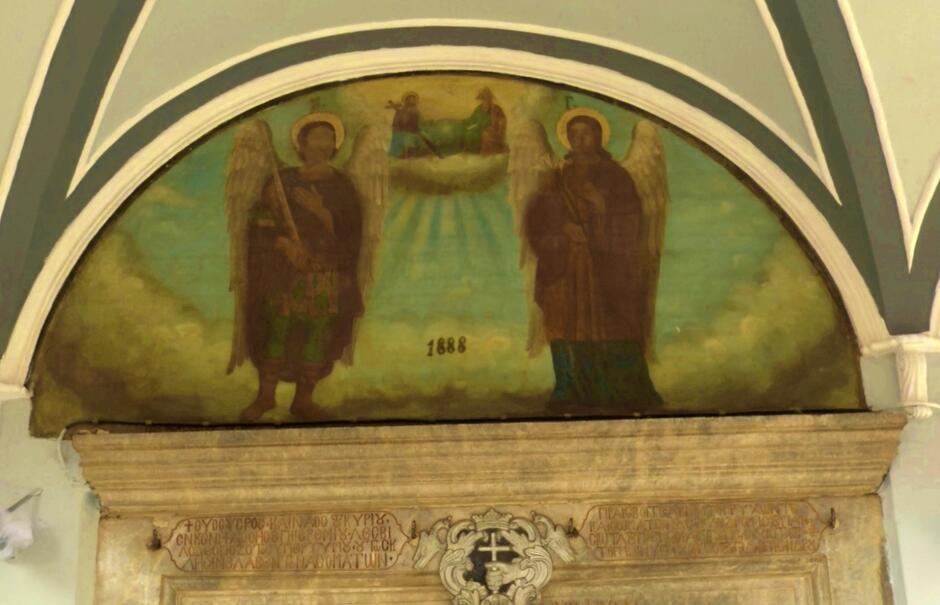
The inauguration of the church is attested by a marble inscription on the lintel, which mentions July 1, 1795, during the days of Metropolitan Jeremiah, at the expense of the monk Galaktion. In fact, it is said that on this day the grace of Saints Anargyros, Kosmas, and Damianos was honored, and an unprecedented celebration took place in the village.
History and Construction of the Temple
Architecture and Interior Decoration
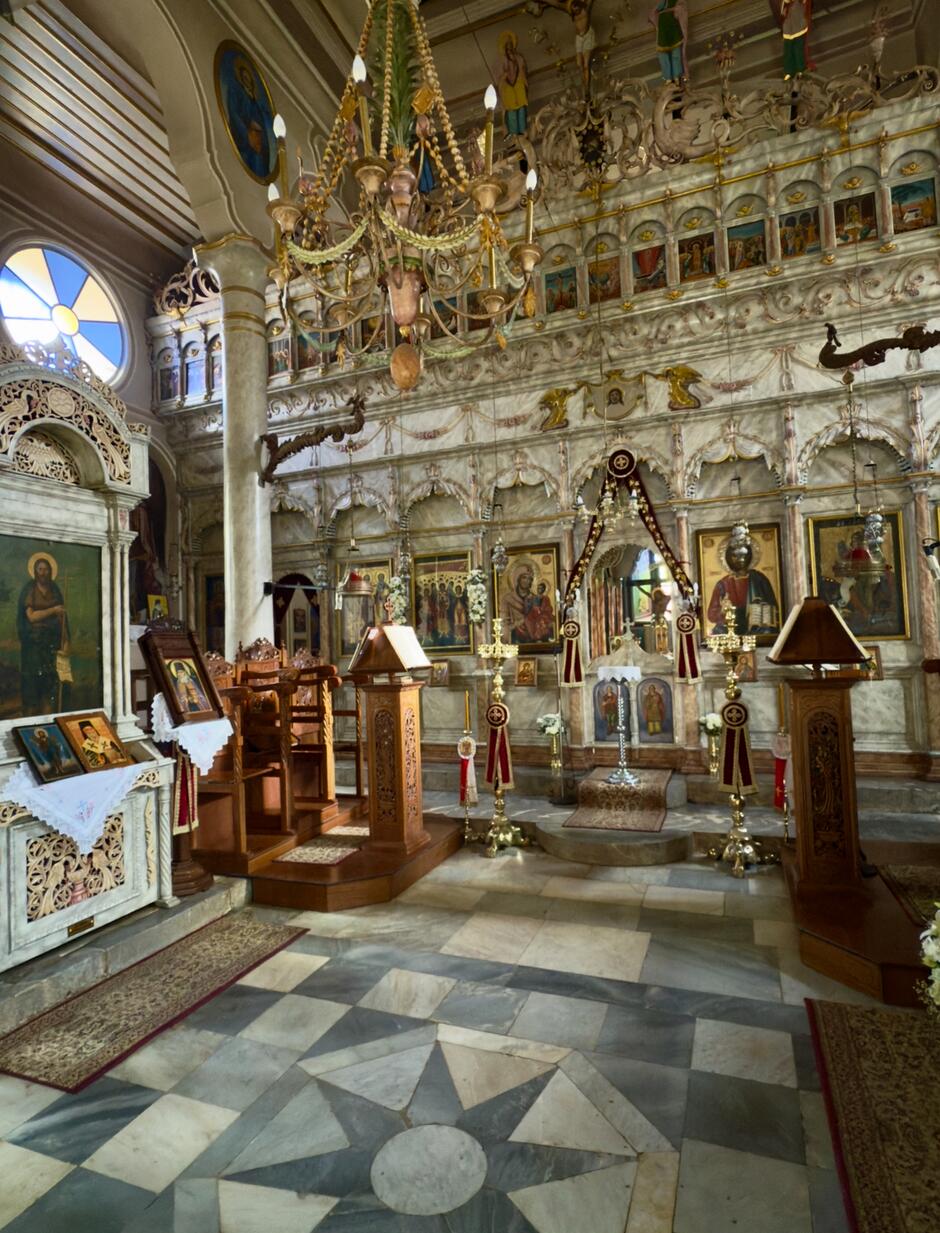
The Holy Temple of Pamegiston Taxiarchon is a three-aisled basilica of the Lesvian style, a characteristic feature of the region's ecclesiastical architecture. Its wooden iconostasis, wooden columns, and wooden chandeliers are key elements of its interior.
The inhabitants of Asomatos primarily used local materials for its construction, utilizing the area's natural resources. Woods like chestnut and walnut were sourced from the Agiasos region, while cypress and poplar trees were used for the columns. Even the chandeliers are crafted from olive wood, showcasing the skill and adaptation to the available raw materials.
Following the inauguration, master stone masons (plakolanades) constructed the temple floor using marble slabs from the quarries of Ekklisidi and Nikon, and master carpenters (marangoi) created the lattice-work gallery (gynaikonitis) and the iconostasis.
Hagiography (icon painting) followed. Initially, a large iron piece shaped like a lyre was used as a simantro (a metal sounding board), hung in the narthex. The bell tower was constructed later, in 1863, thanks to a donation of 100 Ottoman gold liras from the great Asomatos benefactor, Chatzigrigoris Chatzivranas.
Architecture and Interior Decoration
The Miraculous Icon of Archangel Michael
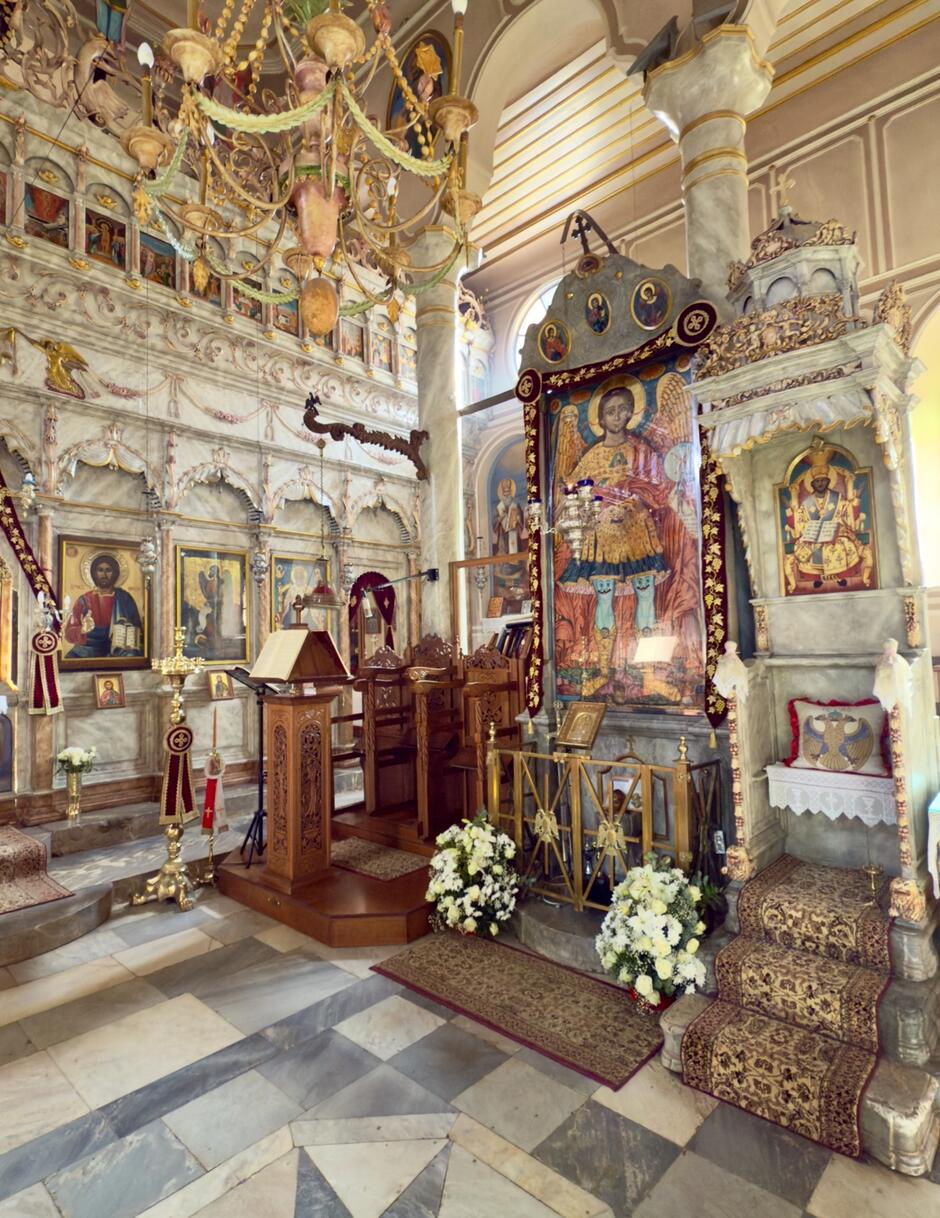
The Holy Temple houses a particularly significant icon of Archangel Michael, painted approximately 200 to 220 years ago, the work of an unknown folk artist. The icon bears a multitude of symbols that reflect the faith and hopes of the inhabitants:
- Naming of the Village: The inscription on the icon, "Archon Michael the Asomatos" (meaning Incorporeal), is the source of the village's name, as Archangel Michael is referred to as "a spirit without a body," i.e., "Asomatos."
- War against the Yoke: In the lower section, Archangel Michael tramples a deceased figure, painted in Turkish attire. This symbolizes the hope for liberation from the Turkish yoke, even though the hagiography was created before the 1821 Revolution.
- Protection and Guidance: Angel faces are depicted within the folds of the Archangel’s bota (robes/cowl), symbolizing the angels in service to the Arch-Strategos (Chief Commander). Higher up, ancient apotropaic symbols (faces with teeth), traditionally used to ward off evil, were integrated to show the Archangel as the warrior against evil.
- The World in His Hands: The Archangel holds a round object bearing the symbol "X" (Christ), signifying the protection of the world in the name of Christ.
- Psychopomp: A small child below the round object symbolizes the soul of every departed person, as Archangel Michael is a Psychopomp, transporting souls to the throne of God.
- "Stomen kalos, stomen meta fovou" ("Let us stand well, let us stand with fear"): A scroll on the icon carries this phrase, which Archangel Michael spoke in the Old Testament, calling upon the angels to stand respectfully before God and marking the cessation of their fall. The celebration of Saint Stamatis on November 8th commemorates this "standing still."
- Perpetual Motion and Spirituality: Ribbons behind the Archangel’s ears symbolize devotion to God and the angels' perpetual movement. The wings on his shoulders symbolize their spirituality, while the sword in his right hand symbolizes the war against evil.
The Miraculous Icon of Archangel Michael
The Role of the Temple in the Community and During Hard Times
Religious sentiment in Asomatos was always vivid and profound, often due to historical tribulations, pirate raids, and Turkish persecutions.
During periods of crisis, such as the "great dying" (plague) of 1832 and the terrible earthquake of 1867, the Holy Temple of Pamegiston Taxiarchon (Archangels), in close cooperation with the local council of elders (Demogerontia), stood by the side of those who suffered.
The Temple functioned as a "Bank" of aid, lending money to financially devastated Christians at a low interest rate, protecting them from usury (loan sharking) and preventing emigration. Furthermore, it funded soup kitchens in its courtyard, which were overseen by the temple's deaconesses, and contributed to the salaries of the teachers at the Mutual Education School (Allellodidaktiko scholeio).
The Role of the Temple in the Community and During Hard Times
Worship and Religious Customs
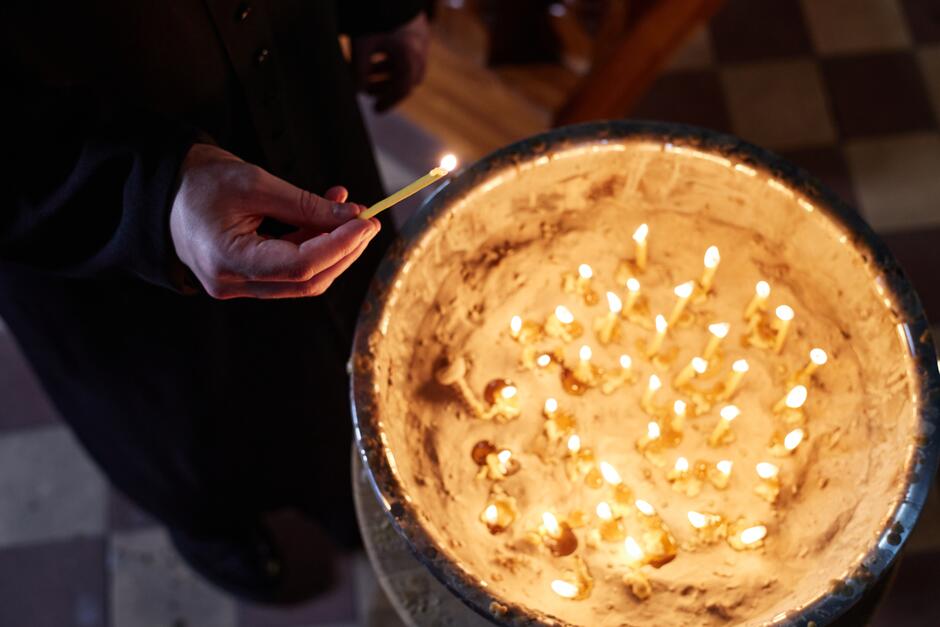
Asomatos continuously preserves certain Christian worship customs that have disappeared in other villages. The religious sentiment is deep, as the inhabitants placed their hopes in the Archangels for protection and salvation.
The Taxiarchs' Feast (Panigyri)
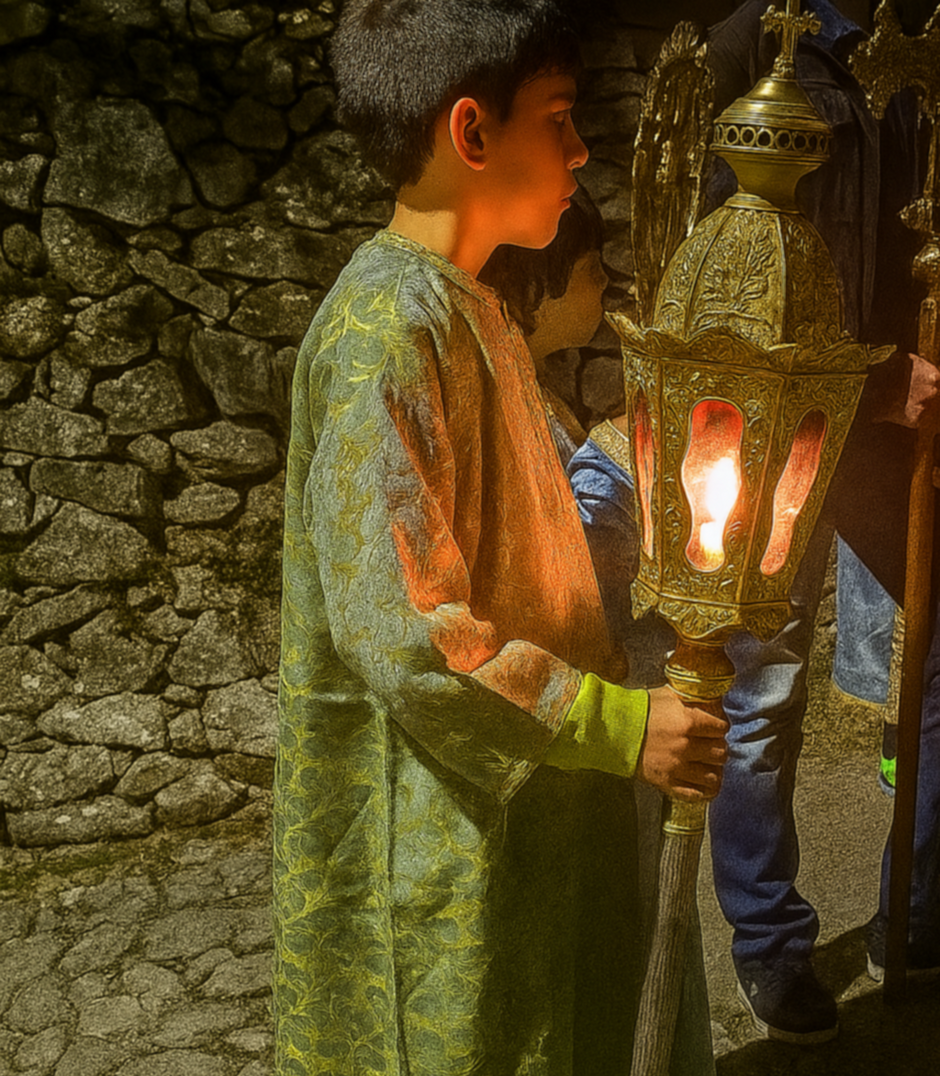
Following the Treaty of Küçük Kaynarca in 1774, the Feast of the Taxiarchs (Archangels) was revitalized, establishing itself as a significant event felt keenly in the surrounding villages. Crowds of faithful flock to Asomatos every year on November 8th to venerate the Saint.
The Lament of the Virgin Mary (Miroloi tis Panagias)
A characteristic example of living tradition is the Lament of the Virgin Mary, which is chanted every Good Friday, just before dusk. Venerable women begin the lengthy lament in a Plagal First Tone (Plagal A'), creating an atmosphere of deep religious devotion. This is considered the only folk song with purely religious content preserved in this way.
The Neomartyrs of Asomatos
Asomatos also produced a Neomartyr, Saint Anastasios Paneras, who, along with Saint Dimitrios Begiazis from Agiasos, suffered martyrdom in Kasamba of Asia Minor in 1816. They were basket weavers who, refusing to convert to Islam, were hanged from a plane tree. Their memory is honored with feasts (panigyria) in Asomatos and Agiasos every year on August 11th.
Worship and Religious Customs
See Also
Ecclesiastical Museum of Asomatos
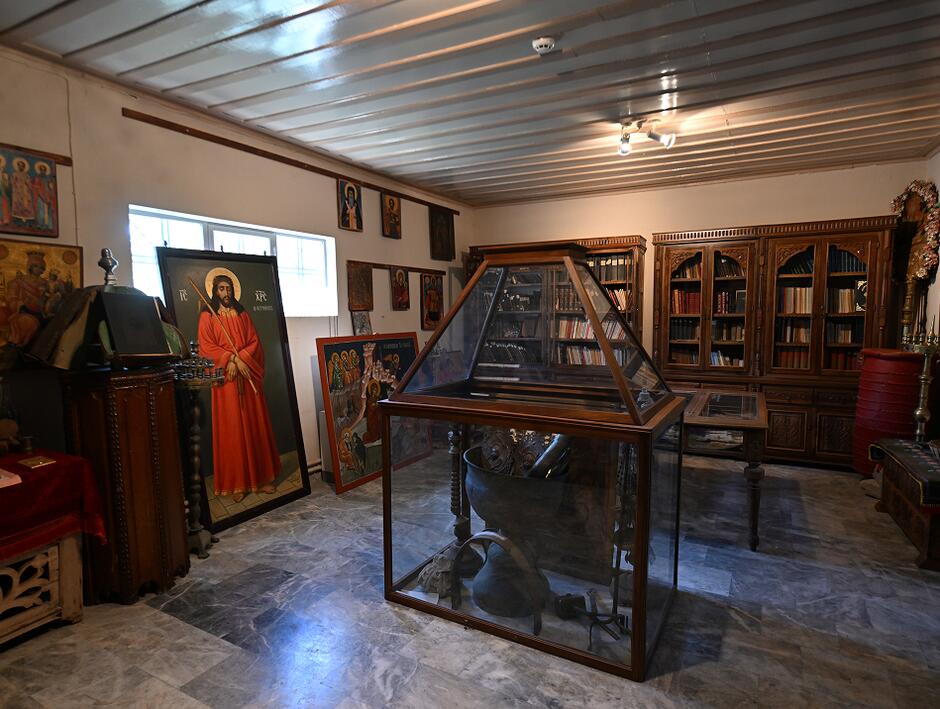
Within the grounds of the Holy Temple of Taxiarchon, the Ecclesiastical Museum of Asomatos houses a rare collection of relics and folk art objects. Here, you will discover centuries-old icons, manuscripts, ecclesiastical utensils, and other objects that tell the story of Asomatos and the faith of its inhabitants. A treasure preserved thanks to the love and care of the village people, waiting for you to explore it.
Ecclesiastical Museum of Asomatos
Folklore Museum of Asomatos
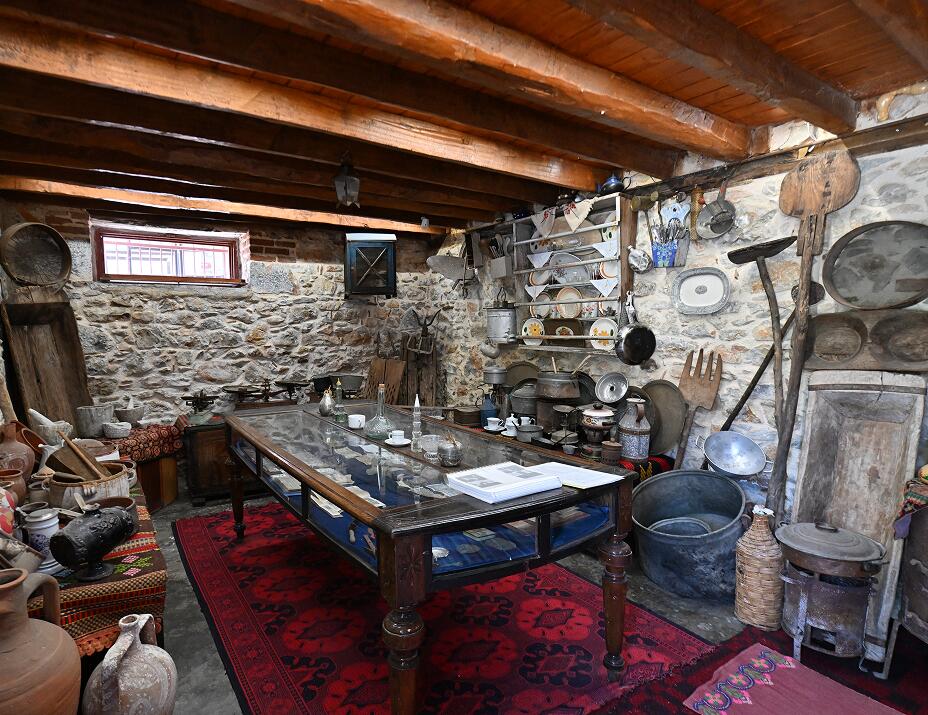
Within the sacred space surrounding the Church of the Archangels, a unique museum brings the daily life and traditions of the village to life. Here, through a collection of folk art and everyday objects, you will travel back in time to the occupations and customs of our ancestors. From the wooden spinning wheel and the stone mortar to the lamps that lit the houses, each exhibit tells stories of toil, creation, and survival, bringing to light the soul of Asomatos through its rich folkloric heritage.
Folklore Museum of Asomatos