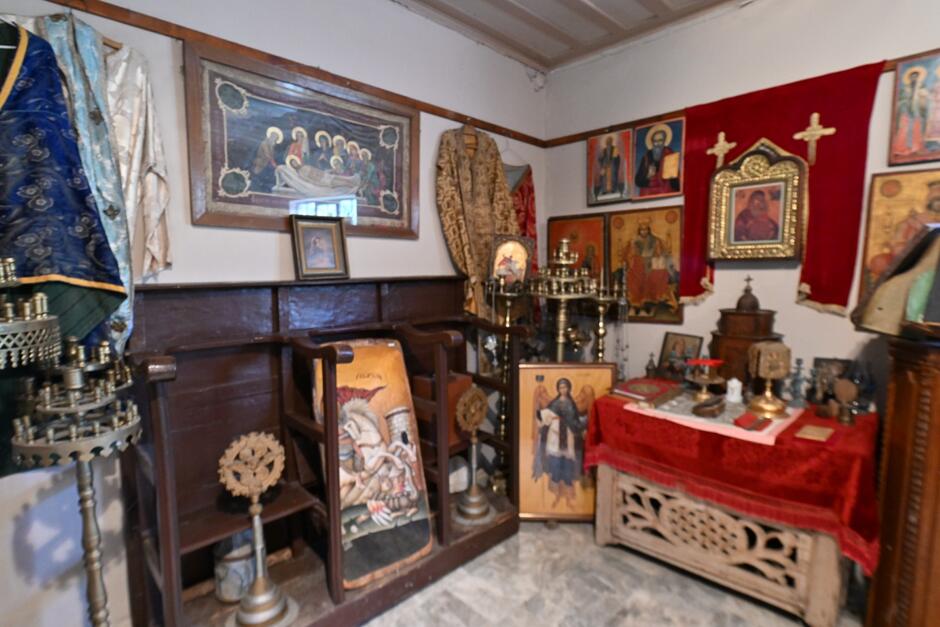
Ecclesiastical Museum of Asomatos
A space that safeguards the memory, faith, and communal history of Asomatos.
The Asomatos Ecclesiastical Museum (also known as the Byzantine Museum) was founded around 1980–1985 thanks to the initiative of the then-priest, Father Efstratios Kalomitzis, and the generous donation of the Asomatos residents, with the late Emmanouil Kontellis as the central benefactor.
The space was created to house and protect treasures of great value, such as:
- Old and valuable Icons that were transferred from the area's chapels.
- Ancient artifacts found during works carried out around the Holy Temple of Pamegiston Taxiarchon.
- Very old ecclesiastical books, some aged 250 years, which contain records of the Holy Temple's income and expenses dating from 1812 onwards, constituting a precious source for the history of the village and the church.
The Seal of the Demogerontia
The most distinctive relic of the Museum is a rare seal which reads: “CHORION ASOMATOU 1863” (Village of Asomatos 1863). This is the second seal of the village, which was used during the period of the Asomatos Council of Elders (Demogerontia).
During that time, three elders each held a piece of the seal. For a document to be sealed and considered valid, all three had to unite and screw their pieces together to perform the sealing. From this practice, where any elder could exercise a veto by keeping their part, the well-known proverb emerged:
“I will not give it, I will swallow it (I will veto it).”